Subtotal $0.00




Email : 3
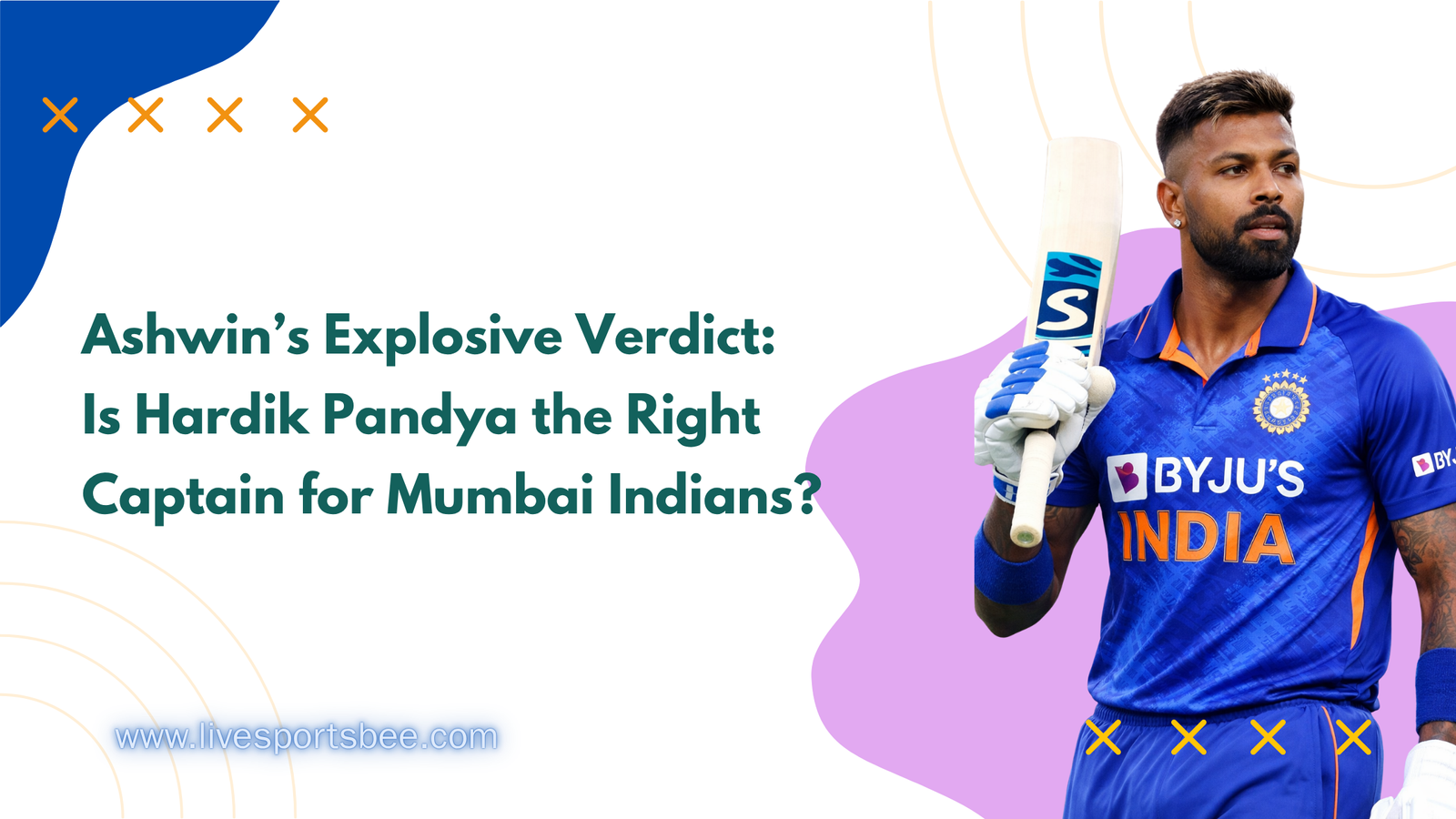
R Ashwin’s Blunt Take on Mumbai Indians’ Leadership: A Deep Dive into the Hardik Pandya Debate.
The world of cricket thrives not only on performances on the field but also on strong opinions off it. Recently, Indian cricket veteran Ravichandran Ashwin sparked intense discussion after sharing his candid thoughts on the leadership situation at Mumbai Indians. His remarks, particularly directed toward captain Hardik Pandya, have ignited debates among fans, analysts, and former players alike.
Ashwin is known for his sharp cricketing mind and willingness to speak openly. This time was no different. His suggestion that Mumbai Indians might need to rethink their captaincy was not just a casual comment—it was a strong statement rooted in observation, experience, and an understanding of team dynamics.
The Context Behind the Statement
Mumbai Indians have historically been one of the most successful franchises in the Indian Premier League. Under the leadership of Rohit Sharma, the team built a legacy of consistency, calm leadership, and strategic brilliance. Rohit’s captaincy brought multiple titles and established a winning culture.
However, the transition of leadership to Hardik Pandya marked a significant shift. Hardik, known for his aggressive approach and all-round abilities, was seen as a modern leader—bold, confident, and expressive. While this change was intended to usher in a new era, it has not been without challenges.
Ashwin’s comments seem to reflect a growing concern: Is the transition happening too abruptly, or is the team struggling to adapt?
Ashwin’s Perspective: More Than Just Criticism
Ashwin’s remarks were not merely criticism for the sake of controversy. Instead, they appeared to highlight deeper issues within the team. He pointed out that leadership in cricket is not just about individual brilliance but about managing personalities, maintaining dressing room harmony, and making calculated decisions under pressure.
In his view, Mumbai Indians might be facing a mismatch between leadership style and team expectations. Hardik Pandya’s aggressive demeanor, while effective in some situations, may not always align with the calm and composed environment that Mumbai Indians had cultivated over the years.
Ashwin subtly emphasized that leadership transitions must be handled with sensitivity. A sudden change, especially when a highly successful captain like Rohit Sharma is still part of the squad, can create internal complexities.
Hardik Pandya: A Leader Under Pressure
There is no doubt that Hardik Pandya is one of the most talented cricketers in modern Indian cricket. His journey—from a young, fearless all-rounder to a captain—has been inspiring. He has already proven his leadership capabilities with another franchise, showing tactical awareness and confidence.
However, captaining Mumbai Indians is a different challenge altogether. The expectations are enormous, the fan base is passionate, and the legacy is unmatched. Every decision is scrutinized, and every failure is amplified.
Ashwin’s “brutal verdict” essentially puts a spotlight on whether Hardik is currently the right fit for this particular setup. It is not necessarily a judgment of his overall leadership ability but rather a question of compatibility with the team’s culture.
The Rohit Sharma Factor
One cannot discuss Mumbai Indians’ captaincy without mentioning Rohit Sharma. As one of the most successful captains in IPL history, Rohit commands immense respect within the team and across the cricketing world.
The presence of such a strong leader within the squad can create a complex dynamic when a new captain takes over. Players may naturally look toward Rohit for guidance, which can unintentionally undermine the authority of the current captain.
Ashwin’s comments indirectly highlight this challenge. Managing a team where a former, highly successful captain is still active requires exceptional leadership skills. It demands emotional intelligence, clear communication, and the ability to unify the group under a shared vision.
Team Dynamics and Dressing Room Environment
Leadership in cricket extends far beyond field placements and bowling changes. It involves creating a positive dressing room atmosphere where every player feels valued and motivated.
Ashwin hinted that Mumbai Indians might be experiencing disruptions in this area. A shift in leadership style can affect how players interact, how decisions are perceived, and how responsibilities are distributed.
For instance, a more aggressive leadership approach might energize some players but unsettle others. Balancing these personalities is one of the toughest aspects of captaincy.
If the team environment is not aligned with the captain’s style, performance can suffer—even if the squad is filled with world-class talent.
Tactical Decisions Under Scrutiny
Another aspect of Ashwin’s critique revolves around on-field decisions. Captaincy in T20 cricket demands quick thinking, adaptability, and precise execution.
Hardik Pandya’s decisions—whether related to bowling changes, batting order, or field placements—have occasionally come under scrutiny. While every captain makes mistakes, consistent questionable calls can raise concerns about strategy and planning.
Ashwin, being a seasoned cricketer, understands the importance of these micro-decisions. His comments suggest that Mumbai Indians may need to reassess whether their current leadership is maximizing the team’s potential.
Fan Reactions and Public Opinion
Ashwin’s statement has resonated widely among fans. Social media platforms have been flooded with debates, with opinions divided into two major camps.
One group supports Ashwin’s viewpoint, arguing that Mumbai Indians should prioritize stability and consider reinstating Rohit Sharma or exploring alternative leadership options.
The other group defends Hardik Pandya, emphasizing that leadership transitions take time and that he deserves patience and support.
This division reflects the emotional connection fans have with the team and its players. It also highlights how influential voices like Ashwin can shape public discourse.
The Bigger Picture: Leadership Evolution in IPL
The IPL has seen numerous leadership transitions over the years. Some have been smooth and successful, while others have faced resistance and setbacks. Ashwin’s comments bring attention to a broader question: How should teams manage leadership changes in a high-pressure environment?
Successful transitions often involve clear communication, gradual change, and strong support systems. Abrupt decisions, on the other hand, can lead to confusion and instability. Mumbai Indians, with their rich history, are now at a critical juncture. The decisions they make regarding leadership could define their future trajectory.
Possible Outcomes and What Lies Ahead
Ashwin’s suggestion that Mumbai Indians consider changing their captain does not necessarily mean an immediate overhaul. However, it does indicate that the current situation requires careful evaluation.
The franchise has several options:
- Continue with Hardik Pandya and provide him with full backing
- Reconsider leadership and explore alternative options
- Adopt a shared leadership approach, leveraging Rohit Sharma’s experience
Conclusion
Ravichandran Ashwin’s comments have added fuel to an already intense discussion about leadership within Mumbai Indians. His perspective, rooted in experience and cricketing intelligence, cannot be dismissed lightly.
At the heart of the debate lies a fundamental question: What defines effective leadership in modern cricket? Is it aggression and boldness, or calmness and consistency?
Hardik Pandya’s journey as captain is still unfolding. While criticism is part of the process, it is also an opportunity for growth and reflection. Mumbai Indians, as a franchise, must now decide how to navigate this phase—whether by reinforcing their current strategy or making bold changes.
One thing is certain: in the ever-evolving world of the IPL, leadership decisions are never just about one player. They shape the identity, culture, and future of the entire team.
And as voices like Ashwin continue to speak up, the conversation around captaincy will only grow louder—pushing teams to rethink, adapt, and strive for excellence.